Tuesday, April 15, 2008

cutting glass

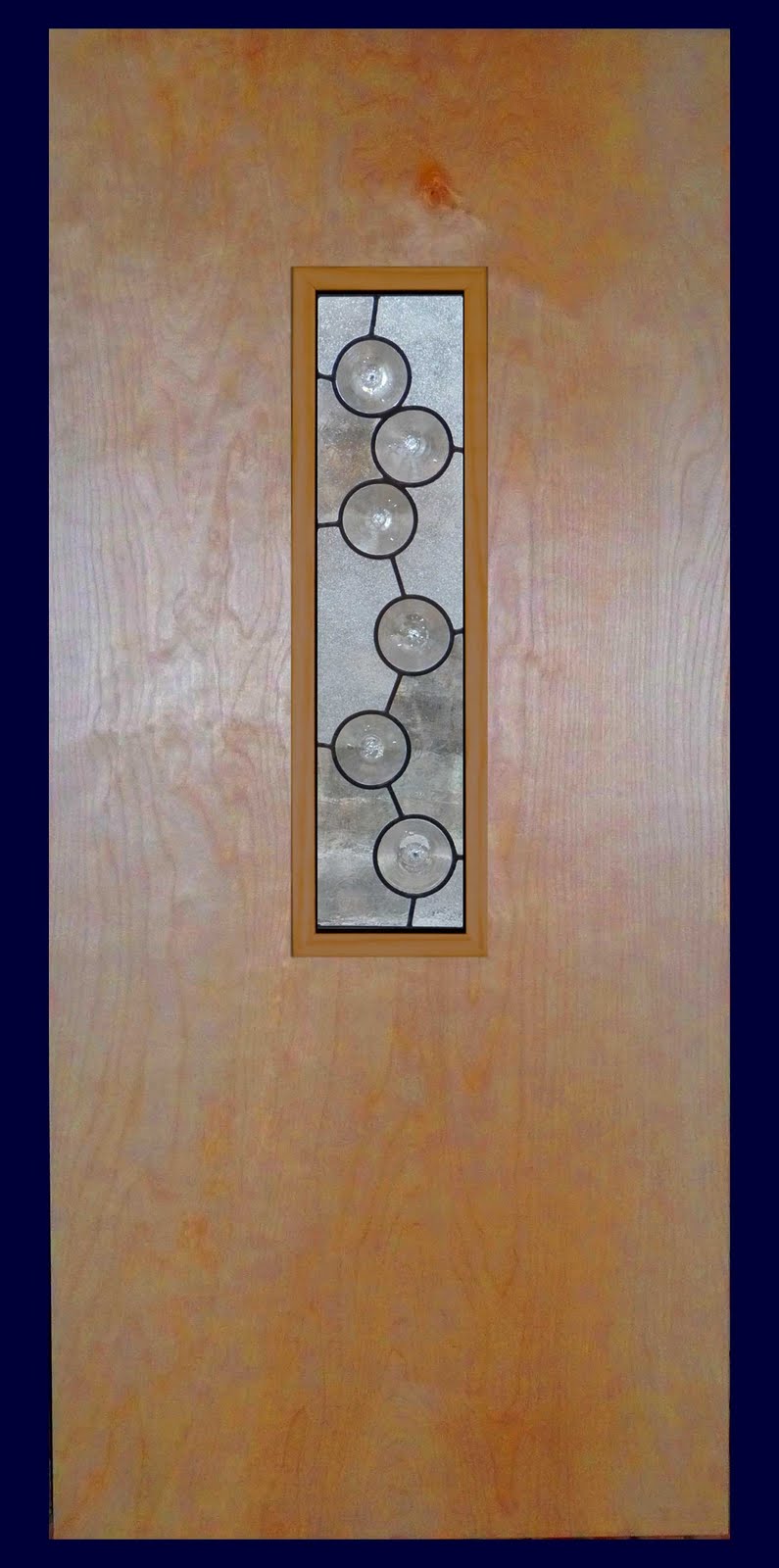
Glass cutting. This panel is for a couple in Florida who instead of ordering a whole door with a leaded glass panel just wanted the panel and are ordering the door separately. The door is a craftsman style door. 


The first step is getting the rondels and laying them out on my template. The rondels dictate the rest of the  design. 


The template gets cut up into patterns which I use to cut the individual glass pieces. Here you see the sheets of glass I use with the patterns laid out on the sheets. The trick is to get as many pieces I can  out of a sheet of glass. 


Here I start cutting the sheet down to smaller pieces. 


The actual cutting. A close up of the glass cutter scoring the glass on the patterns edge. 


If you can make out the line in the glass that is the cut in the glass. Looks like a big scratch  This scratch is what starts the break in the glass. 


Here you see the first cut along the edge of the pattern.

You just keep cutting along the edge of the pattern until you've cut each edge.


Here are all the pieces that came out of that one sheet of glass. These six pieces have 37 edges that are individual cuts. It is a labor intensive process as you can see. Lots of repetition. 


And here are all the pieces that will surround the rondels used in the glass panel.


The final product after it has been leaded and soldered. What a difference the glass looks like from sitting on the bench. Not bad. When the glass sits on the bench you are seeing it with reflected light. Here the glass is shown in transmitted light.

Friday, March 28, 2008

Orange leaded glass door

Every client interaction is unique. Because my leaded glass doors and stained glass windows are custom made, it is not just a simple point, click and ship product. Often times glass samples need to be sent and details nailed down like door sizing and delivery. Once in awhile, though, a client wants to discuss design options. Normally, I am skeptically open to a clients ideas about customizing a design. 

Here was just such an order where the client was very involved in the design. The above photo came from the client, not me, and is a combination of two of my leaded glass door designs, the simple door and the 4 splatter door. Ultimately they went with the left design, 3 orange splatters and two clear rondels. Here is a case where I thought the client did a very nice custom design. The client went with the orange color to match their orange glass tile. I always like to see when the window can tie into the rest of the house.  


From the clients design I ordered the rondels from Kokomo Glass, my excellent rondel supplier in Indiana. I lay them out on a sheet of paper that I will use to create patterns for the rest of the glass. Using a heavy stock, 70# brown paper, I outline the actual size of the window used in the leaded glass door.


I trace the rondels and the reinforcing bars first. The reinforcing bars are the thick lines that go all the way across the panel. Once these are penciled in I draw in the rest of the lead lines. The lead lines outline the individual glass pieces.


I then cut out each piece that will be used ....


... as a pattern ...

to cut the glass.

After all the glass is cut I lay it out on the bench.

Do some leading, soldering, 


puttying,

and cleaning. The cleaning is done with saw dust. Saw dust is great for absorbing all the oils from the flux used in soldering and the putty. After the cleaning all I need is the door and away it goes.

Wednesday, March 19, 2008

leading a side lite

 Leading, that crucial first step in joining the individual glass pieces together. Here I am leading a simple leaded glass side lite, which is part of a bigger leaded glass entryway


After the glass has been cut, grossed and filed to the size of my paper patterns, I lay it all out according to where each piece goes in the final panel. The circles are clear hand blown rondels and do not need to be cut. Surrounding the circles is clear, heavy seedy glass. All the glass is handblown. 


This is a poor photo of the lead came profile. There are two techniques used in stained glass, the copper foil technique and the lead came technique. I use lead came in all my work for various reasons, mainly because that is what I was taught.  Many people who take a stained glass course learn the copper foil technique. Looking at the profile of the lead came you can see a grove on each side.


These grooves or slots is where the glass fits into. Again a poor photo but you should get the idea of how the glass fits snugly into the groves.


Starting at one end of the leaded glass side lite,


I secure the first piece of glass against the outer edge lead. The edge lead is what surrounds the whole leaded glass panel. It gets buried into the wood frame of the door or side lite and therefore is not visible after I install the glass panel.


Next I place a strip of came lead against one of the edges of the glass. I line up the next glass piece against the other side of the lead came and ...


measure and cut the lead came to the proper length.

The third piece is the rondel shown here already wrapped in lead came. Again it is secured against the two other pieces of glass.


Guess what comes next, right, the fourth piece.


I could go on like this for all 30+ pieces but I think you get the idea.

Finally the glass panel is assembled and ready for soldering. 


Wednesday, February 13, 2008

one leaded glass door, 72 days

Since the middle of September everyday I think of it I snap a photo of my front door. You can see a slide show of my efforts on the right hand side. All the glass in the door is clear, handblown glass. As you can see depending on what is going on behind the glass, the glass is ever changing. I've had clients call and ask for the 'green' door when they are really looking at a photo that was taken in the spring time.


Tuesday, February 5, 2008

Duke Chapel


Duke Chapel, Durham, North Carolina. This is an annual pilgrimage I make every January to help my father on an ongoing restoration project at the chapel. We spend about 10 days removing a window. The window goes back to my father's studio in Reston, Virginia where it gets completely rebuilt. In August we reconvene at the chapel to reinstall the window. 


Here is an outside view of the clearstory windows. 


This is Jacob, the window we took out this year. There are 27 panels in the 3 lancets. If you can make out the dark horizontal lines they are 'T' bars holding up the individual panels. Each panel will get completely disassembled, cleaned and  rebuilt. 


The scaffold from the inside.


My grinning mug taking out the top pieces in the tracery.

Wednesday, January 30, 2008

Christ Church - Norfolk, VA


Here is Christ and Saint Luke's Episcopal Church in Norfolk, Virginia. They have some windows that need 'light' restoration work. I say 'light' because they do not need to be rebuilt nor taken back to the studio. All the work can be done onsite. The windows are beginning to buckle and if something is not done soon will buckle to the point where they need major restoration work. Right now we can add some additional barring and stop the buckling. Pretty straight forward. We worked on the two top windows you can see on the side of the chapel.


Scaffolding, about 40 feet high.


Close up of the panel reinstalled with the additional bars. These windows have an interesting history. They were all built by a studio in Europe before the start of WWI. As the windows were in transit the war broke out. The windows got as far as England  where they had to stay in storage for the duration of the war.  


Here is my portable studio set up in a small nook underneath the window.


My grinning mug happily working away. Took about 4 full days to do 2 windows. 

Tuesday, January 22, 2008

One up Web - Installing


Now comes the moment of truth. Because the panels are so big I do not know what they will look like in full transmitted light until they are installed. I also find out how good my measurements are. 


Not bad.